.svg)

Court told of “abysmal failure” to consult on Yntegra project
Fred Smith, KC, says public kept in dark as developerstried to gain a “foothold” on East Sampson Cay before the full resort was approved.
The government is guilty of an “abysmal failure” to put key environmental documents before the public, leaving those affected by theYntegra Rosewood Exuma project unable to comment on what was planned, the Supreme Court heard.
Fred Smith, KC, for neighbouring property Turtlegrass, told Justice Leif Farquharson that the Department of Environmental Planning and Protection (DEPP) and developers Yntegra had withheld document after document as the project evolved.
“There was an abysmal failure on the part of the developersand the DEPP to make available to the public by way of original consultation,re-consultation, or further consultation, as there were iterations developed onthe relevant documentation,” he said. “There was a host of fundamental andrelevant documentation which the DEPP and the developers should have madeavailable to the public for consultation.”
In a move which he earlier said “rode roughshod” overenvironmental laws, Mr Smith listed ten documents he said were never disclosedto Turtlegrass, neighbouring Over Yonder Cay or the public during consultationon the Rosewood-branded project. Among them were the second revision of theenvironmental impact assessment (EIA), the original environmental managementplan (EMP) and its revision, and the enabling works statement by consultants,BRON. The list also included Certificates of Environmental Clearance (CECs)2400 and 2400A and the public consultation report.
Consultation, he said, is not necessarily a single event.“The consultation doesn’t only have to occur once,” he said. “If important documents or revisions to plans are produced to the regulator, the regulator has a duty to provide these to the public for consultation.”
The EMP, he said, was an even more important document thanthe EIA, yet those who should have been consulted - including the public andother key stakeholders - never had a chance to view it. The EIAeventually shared with the public, he said, contained “no real analysis” ofadverse effects of the project.
Consultation, Mr Smith said, “is so fundamental to ademocratic process to allow persons who are affected by a proposed developmentto make informed representations.” Citing the UK Supreme Court’s Finch ruling,he quoted Lord Leggatt: “Public participation is necessary to increase thedemocratic legitimacy of decisions which affect the environment.”
“Consultation is not a formality or a hindrance,” he said.“It’s not just a formality, it’s not lip service. It’s a real process. And itis one that should be conducted with full transparency, honesty and fulldisclosure.”
Mr Smith contrasted the case with the Guana Cay litigation,which occurred before major environmental laws were passed in The Bahamas, inwhich a town meeting where plans were put up on a board was found to beadequate consultation. “This is not Guana Cay,” he said. “We have theprotection of the EPPA (Environmental Protection and Planning Act), theregulations and the PSA (Planning and Subdivision Act) and the common law.”That case, he said, “would have been decided very differently” had theEnvironmental Planning and Protection Act and its regulations been in force.
Recalling Dame Joan Sawyer’s words in Guana Cay on theuniqueness of the Bahamian archipelago, Mr Smith said the environment was“effectively a party to this action.” The Director of Environmental Planningand Protection, he said, “is supposed to be the steward of the environment, notto allow the environment in the Exumas to be sacrificed on the altar of thealmighty dollar for short-term profit by developers who will sell it offquickly, leave the Bahamas and have no more regard for the environment.”
“The EPPA seeks to protect the environment of the Bahamasfor the heritage of us, our children and grandchildren,” he said. “It is ourpatrimony, and it should not be lightly treated.”
Mr Smith said it was important to appreciate “how subtly andunbelievably” the developers “were trying to sneak in all the work contemplatedby” three smaller CECs granted before the main resort approval.
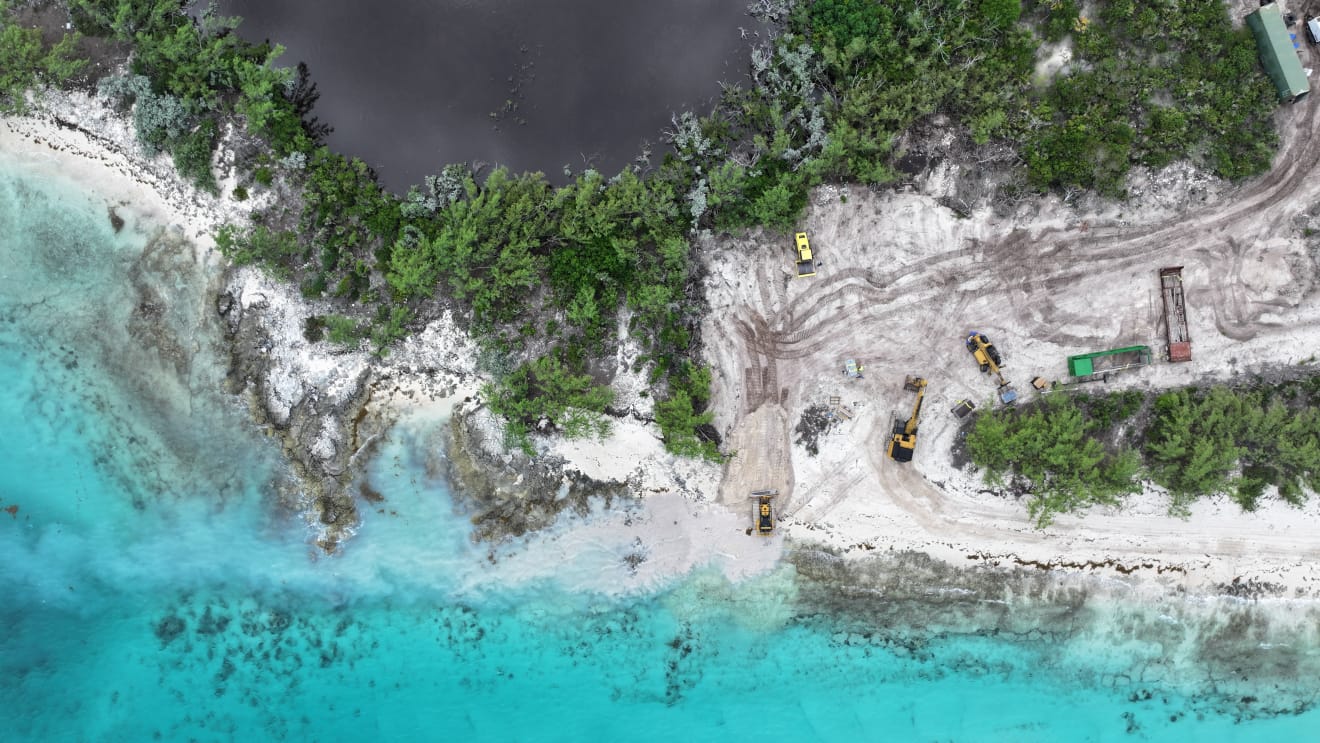
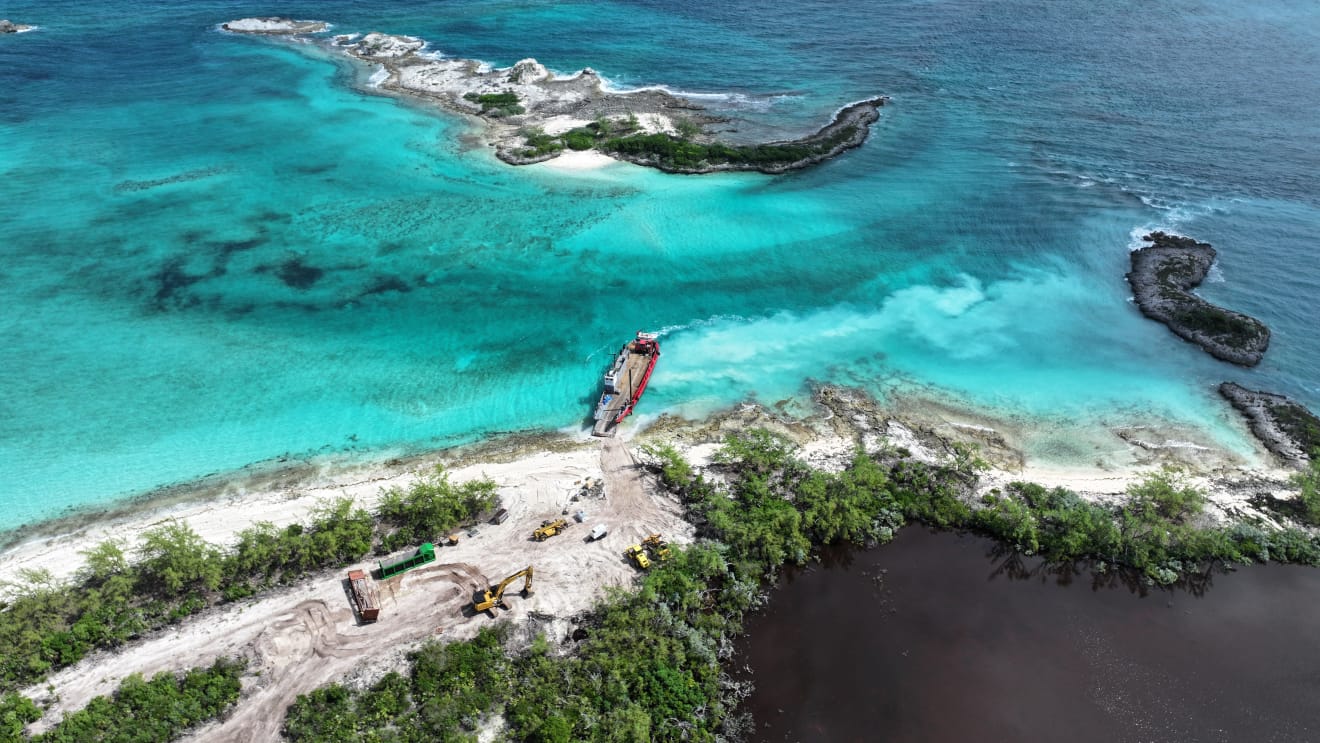
The application for CEC 2894, the June 2025 certificate covering the East Sampson Cay resort, did not mention their controversial plans for the North Bay at all, he said, and the certificates referred only to a“service dock.” “But my Lord, it’s not simply a service dock,” he said. Theworks included a sewage plant “on the doorstep of Over Yonder and Turtlegrass”and “huge diesel power plants” to supply East Sampson Cay. They also includedfuel tanks, dredging for a roll-on/roll-off operation, a reverse osmosis plant,facilities for 150 employees, and a jetty extending 390 feet from the dock.
“Search high and low,” he said. “Neither the public nor thecourt today will find an application for any of those works in the North Bay onEast Sampson Cay.” The words “service dock,” he said, were “a Trojan horse forall of these works.”
He took the court through the few passing references to thedock in the first revision of the EIA, including a table entry labelled only“BOH.” “And how is the public supposed to know what that is unless you’re anexpert at this?” he asked. “Doesn’t talk about a jetty. Doesn’t talk about fueldepot. Doesn’t talk about waste sewage.”
He also pointed to the 32 geotechnical boreholes mapped inthe BRON report, “very strategically placed to require the roadways for theentire master plan to be laid out and excavated.” Geotechnical investigation,he said, “is a paradigm of preparatory work which might indicate an intentionto make the land ready for any type of development. It has no purpose except toenable designing and constructing.”
Had the court not granted an injunction earlier this yearbarring dredging in North Bay, Mr Smith said, the damage would have beenirreversible. The developers would then have argued they needed the dock forworkers, fuel and waste. “That’s the foot in the door which your Lordshipthankfully stopped until the determination of this trial,” he said. “But thatis the whole point: they were sneaking in all of these works under those CECsin order to get ahead of the game. And there was no consultation on any of that during the consultation period.”
Had the smaller certificates stood but CEC 2894 beenrefused, he said, the developers “would have ravaged the land, ravaged theNorth Bay” and still not had approval for the whole project.
The DEPP wrote to the developers on August 11, 2026, telling them to stop, but they kept arguing “that they could do it without any otherpermits.” By then, he said, they had bulldozed acres on the southern tip ofEast Sampson Cay “with no regard for the protected trees as required by theforestry permit.”
Mr Smith said the three smaller CECs, granted without consultation, were “an attempt to get a foot in the door so that the baselinewould have been changed” for the consideration of CEC 2894.
“They were getting a foothold on Normandy Beach on EastSampson Cay,” he said. “And they have been told to stop and they finally havestopped.”
Peter Village, also for Turtlegrass, had earlier set out whythe smaller certificates mattered. Because it was “by no means a foregoneconclusion” that CEC 2894 would be granted, he said, “there was a realadvantage in getting those under their belt” – “unless of course, heavenforfend, the Director of DEPP had closed her mind to the issue.”
“Those works were in the ground. That land had been cleared. Those roadways had been effectively made up,” he said. “And that change to thebaseline would have made a real difference to further applications.”
Mr Village said the same pattern was repeating with aproposed 22-acre solar farm on the northwest tip of Big Sampson Cay. In aSeptember 22 affidavit, the developers said the solar farm was not part of theproject when the earlier applications were made, and was added after publiccalls for more renewable energy. It needed its own CEC application, filed inMay 2026.
Mr Village said it was “almost certainly the case” that thedecision was taken before CEC 2894 was issued in June 2025. That would haveobliged the developers to tell the Director and consult on a revised EIA. “Ifthe decision had in fact been that the solar farm only came within the lightbulb in their minds after June 2025, they would have said just that in thisaffidavit,” he said. “But they didn’t.”
Mr Smith said CEC 2894 was now being used as the baselinefor the solar farm. The argument would be, he said: “How can you not approve itgiven that you’ve approved the entire East Sampson Cay development and we needpower?”
Latest Blog